

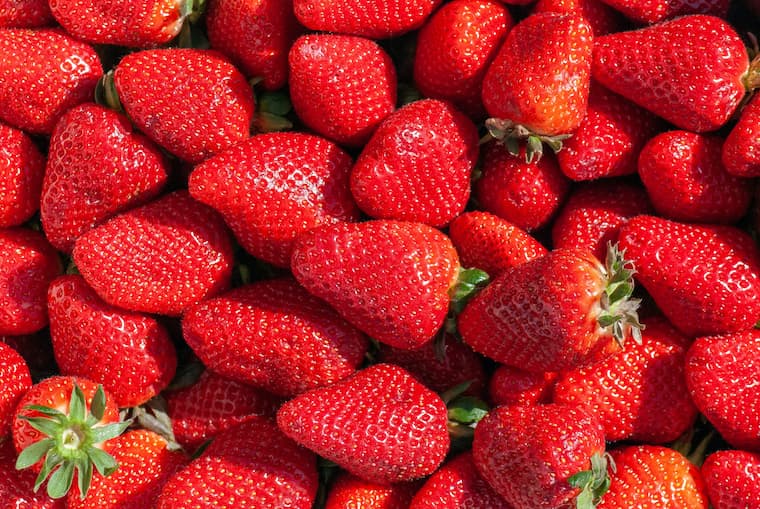
Have you ever bitten into a strawberry that looked like a ruby-red masterpiece, only to find it tasted like… watery nothingness? It’s a heartbreak we’ve likely all experienced at the grocery store. On the flip side, you occasionally find that one pint of blueberries that tastes like pure candy.
What if we told you there’s a scientific way to ensure candy-level sweetness every time? Welcome to the world of the Brix Scale. It’s the secret language of sweetness that thoughtful farmers use to determine when a harvest is truly ready for its starring role in your kitchen.
Brix 101
At its simplest, the Brix scale is a way to measure the sugar content in a liquid solution. The scale typically runs from 0 to 100 degrees. One degree Brix is equal to 1 gram of sucrose in 100 grams of solution. For fresh fruit like berries, you are usually looking at a sweet spot between 6 and 18, where a score of 6 tastes watered-down and tart. A 14 or higher indicates a premium, deeply sweet, and flavor-packed harvest.
Farmers use a nifty tool called a refractometer. They squeeze a few drops of juice onto a glass prism, and the device measures how much light bends (refracts) as it passes through the liquid. The more sugar and dissolved solids (like vitamins and minerals) in the juice, the more the light bends, and the higher the Brix reading. Think of it as a density check for flavor. A high Brix reading doesn't just mean more sugar; it usually indicates a more nutrient-dense, high-quality piece of fruit.

Who Uses the Brix Scale?
While you might not see Brix levels listed on your grocery store shelf labels (yet!), several industries rely on this scale to watch patterns, check for consistency and make important decisions for their harvest.
- Vintners (Winemakers): This is perhaps the most famous use. Did you know that grapes are berries? Wine starts as grape juice, and the sugar in that juice is what yeast turns into alcohol. If the Brix is too low, the wine will be thin and weak. If it’s too high, the alcohol might overpower the delicate notes of the grape.
- High-End Produce Growers: Farmers who pride themselves on premium fruit use the scale to time their harvests to the exact day when the fruit hits its peak potential.
The Berry Diva: Maximizing Flavor
Berries, specifically strawberries, raspberries, and blueberries, are the true divas of the Brix scale. Unlike bananas or avocados, berries do not significantly ripen or get sweeter once they are plucked from the vine. This makes the Brix reading critical. If a farmer picks a strawberry at an 8 Brix, it will stay at an 8 Brix all the way to your refrigerator. But if they wait until the sun has done its work and the berry hits a 12 or 14 Brix, you’re getting a fruit that has maximized its flavor and nutritional density. When berries hit high Brix levels, the flavor isn't just sweet, it’s complex. You start to taste the floral notes, the tang, and the deep berry essence that makes them so addictive.

Why High Brix is a Win for Your Health
This is where the science gets really exciting for you. When you start with high-Brix fruit, you are essentially outsourcing your sweetening to Mother Nature.
If you use fruit that is naturally at its peak sweetness, you drastically reduce or even eliminate the need for added sugars, honey, or maple syrup in your recipes.
By choosing high-Brix fruit, you avoid the laundry list of added sweeteners that can spike your blood sugar and cause an inflammatory response. You’re getting the fiber, the antioxidants (like anthocyanins in blueberries), and the natural sweetness in one clean package. It’s the ultimate biohack for keeping your sugar intake low without feeling like you’re missing out on dessert.
The Rise & Puff Connection: The Secret to Our Pies
At Rise & Puff, we apply this same quality-first mindset to everything we create, including our pies.
When we source fruits for our fillings, we aren't just looking for fruit that looks good in a photo. We look for fruit with a high Brix count. Why? Because we appreciate allowing the berries to do the heavy lifting.
- Quality over Chemistry: Because our berries are harvested at their sweet spot, we don't have to dump a bag of cane sugar into the filling to make it taste good.
- Authentic Flavor: A high-Brix berry pie tastes like berries, not like syrup.
- Clean Labels: This allows us to keep our ingredient lists short and recognizable. No thickeners, no mystery jars of corn syrup, just the natural deliciousness of a well-grown berry.
Whether you're enjoying one of our pies or just picking up a pint of berries at the farmers market, remember to look for that deep color and fragrant aroma. That’s the Brix talking!

Sources:
University of California Agriculture and Natural Resources. "Understanding Brix and Sugar Content in Fruits."
Journal of the Science of Food and Agriculture. "Relationship between Brix and Consumer Acceptance of Strawberries."
Kleinhenz, M. D., & Bumgarner, N. R. (2012). "Using Brix as an Indicator of Vegetable Quality." Ohio State University Extension.
Harrill, R. (1998). "The Brix Chart."


Leave a comment
All comments are moderated before being published.
This site is protected by hCaptcha and the hCaptcha Privacy Policy and Terms of Service apply.